The Beginning of My Developer Journey
How I went from a kid who wanted to be a hacker to a software engineer — one step at a time.
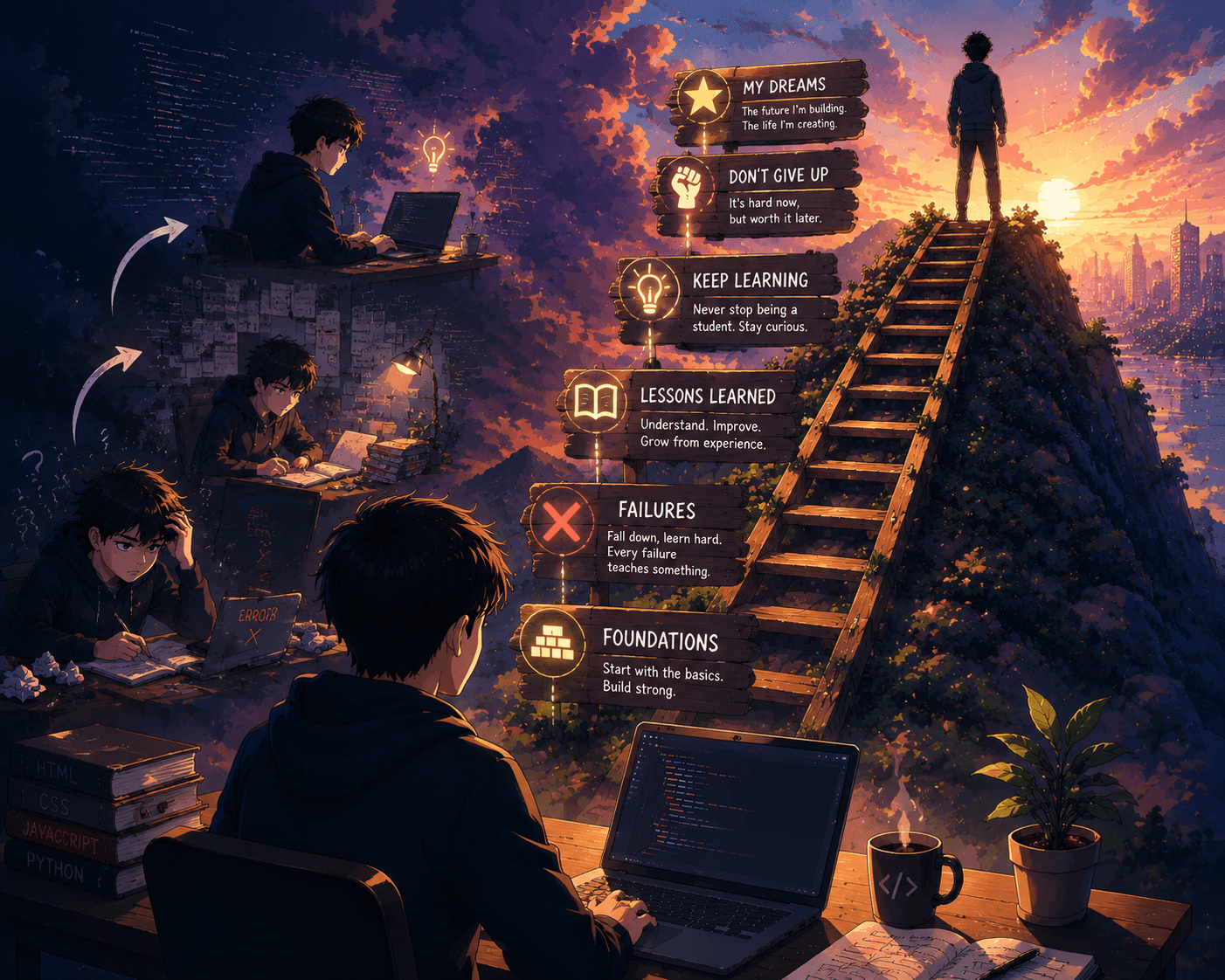
I didn't come from a computer science background. I didn't have a roadmap. What I had was curiosity and a willingness to figure things out. This is the story of how I went from knowing nothing about code to building real projects as a software engineer.

It Started with a Dream
Ever since I was little, I was fascinated by computers. Back then, I only knew computers as machines for playing games, watching videos, and browsing the internet. But what really caught my attention was hacking. I imagined myself typing away on a green screen, breaking into systems like in the movies. It looked so cool.
That dream never left me.
The Laptop That Changed Everything
After I passed my matriculation exam, my brother surprised me with a new laptop. That was the moment everything started. I began practicing typing every single day — mornings, nights, whenever I could. I kept dreaming about becoming a software engineer, and no matter how hard things got, that dream didn't change.
Then I passed the MIIT entrance exam and got into MIIT with an ECE major. In my first year, I had to learn C programming. It was the first language I ever wrote, and it opened my eyes to how things actually work. For the first time, I understood flowcharts, pseudocode, and the logic behind software. It was like learning a new way to think.

The Years That Shaped Me
Then life threw a curveball. COVID-19 hit, followed by a military coup. School closed for almost two years. For most people, that would be a setback. For me, it became an opportunity.
During those two years, I went deep. I started exploring C++, Python, and Java on my own. That was when I truly understood object-oriented programming — how the real world is organized with objects, classes, and inheritance. I wasn't just memorizing syntax anymore. I was learning how to model problems and build solutions.
What kept me going was curiosity and consistency. When I got stuck, I didn't immediately ask someone else. I tried to understand it myself first — reading docs, watching tutorials, googling everything. Then I'd ask seniors for feedback. That process of struggling and figuring things out taught me more than any classroom ever could.
Discovering Web Development
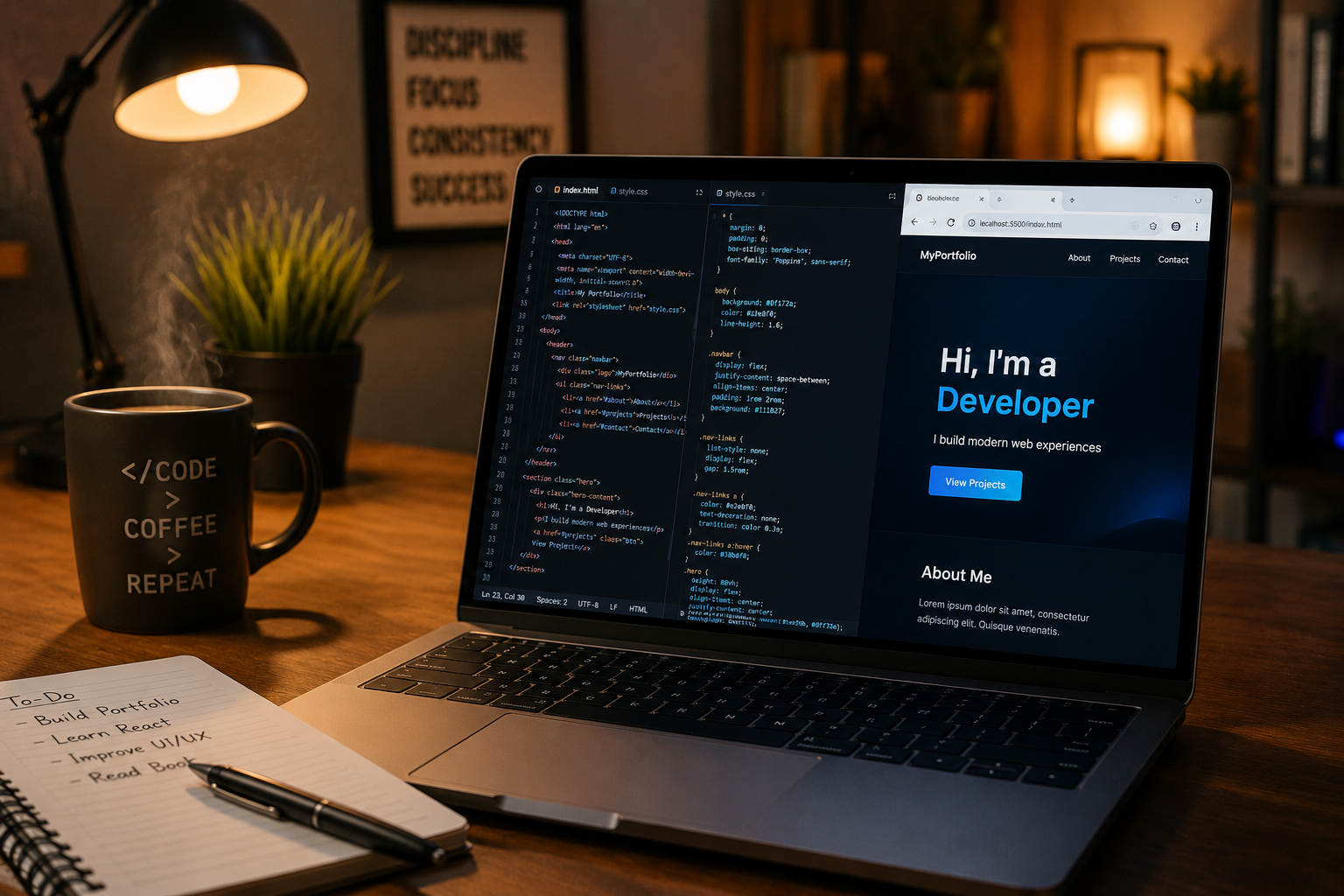
The real magic happened when I stumbled into web development. I started playing with HTML, and something clicked — I could write a few lines of code and see results in the browser instantly. I'd test it, tweak it, test it again. That loop of writing and seeing results was addictive.
So I dove in. I learned CSS to make things look good, and JavaScript to make things interactive. I started building small projects right away. My mindset was simple: when you learn something, build something alongside it. It doesn't matter how small the project is — the value is in the doing.
Then I picked up React and started building projects that felt like real-world applications. After that came PHP and Laravel for backend work, and eventually Next.js for full-stack development. I combined all of these technologies in different projects, each one teaching me something new.
What I Learned Along the Way
Throughout my university journey, I gained a lot of hands-on experience. Not just in coding, but in software engineering — understanding how to structure projects, write clean code, and solve real problems. Lab practicals and university projects gave me the space to experiment and fail safely.
But it wasn't all smooth. I faced real struggles along the way — depression, feeling lost without a clear roadmap, not having mentors, and struggling to find the right study resources. There were moments when I questioned everything. But I kept trying again and again, and eventually I found solutions to all of my problems.
The biggest lesson was this: you don't need to be perfect to start. You just need to be willing to learn, stay consistent, and keep building — even when it's hard.
Where I Am Now
Today, I'm a final year student at MIIT. I'm doing my internship at Edupyramid, powered by SINE IIT Bombay. Working with people from different countries has taught me a lot about collaboration and communication in real-world projects. It's one thing to build projects alone — it's another to work as part of a team across cultures and time zones.
I'm applying everything I've learned from my first year to now — all the self-study, the late nights coding, the projects — into my capstone project. This is my last project at MIIT, and I'm putting in as much effort as I can.
Like I said before, I will keep chasing my dreams no matter what the journey looks like or how far it is. I believe that one day I will fulfill the dreams I've had since I was a little kid.

Advice for Fellow Developers
If there's one thing I want to leave you with, it's this: learn while you build, and build while you learn. No matter how far the road is, the important thing is to take the first step and keep moving. You will get to the day and the dreams you want.
And please — don't compare yourself with others. People have different abilities, different time, different money. We aren't born at the same time, and we don't die at the same time. Everyone's journey is different. All you need to do is keep trying and ignore the noise around you.
What's Next
My journey is far from over. I want to extend my knowledge into mobile development and data analytics. Data is becoming more important in today's world and will only grow in the future. And then there's AI — I love working with AI agents. They make building projects and learning new things so much easier.
But here's the thing — don't skip your foundation. Learn the core concepts first, then combine them with AI to smooth your journey as a developer. If you use AI carefully and the right way, you'll always be one step ahead. It's a tool, not a shortcut. The foundation is what makes the tool powerful.
Conclusion
Looking back, I'm grateful for every step — the mistakes, the late nights debugging, the moments when nothing made sense. All of it shaped me into the developer I am today. And I'm just getting started.
If you're at the beginning of your own journey, remember: every expert was once a beginner. Keep going.
Stay tuned. Thanks for reading!